Tag: dogs

  • Carolina Dog the American Dingo

    The Carolina Dog is a feral or semi feral landrace of dogs native to the South East United States, mostly in Georgia and Carolina. Commonly called the American dingo due to their similar appearance the Carolina Dog is unrelated to Austrialian Dingos. Representing a unique line of wild dogs found only in the United States.

    While various groups of feral dogs are not by any means uncommon in the American South and have existed for hundreds of years, likely long before the arrival of European settlers. The author himself recalls many packs of feral dogs in rural areas of Texas, Louisiana, Arkansas and Oklahoma. These dogs are typically descended of strays, usually rely on human settlements for food and are often thought of as pests no different then the feral pigs that are so common in the same areas.
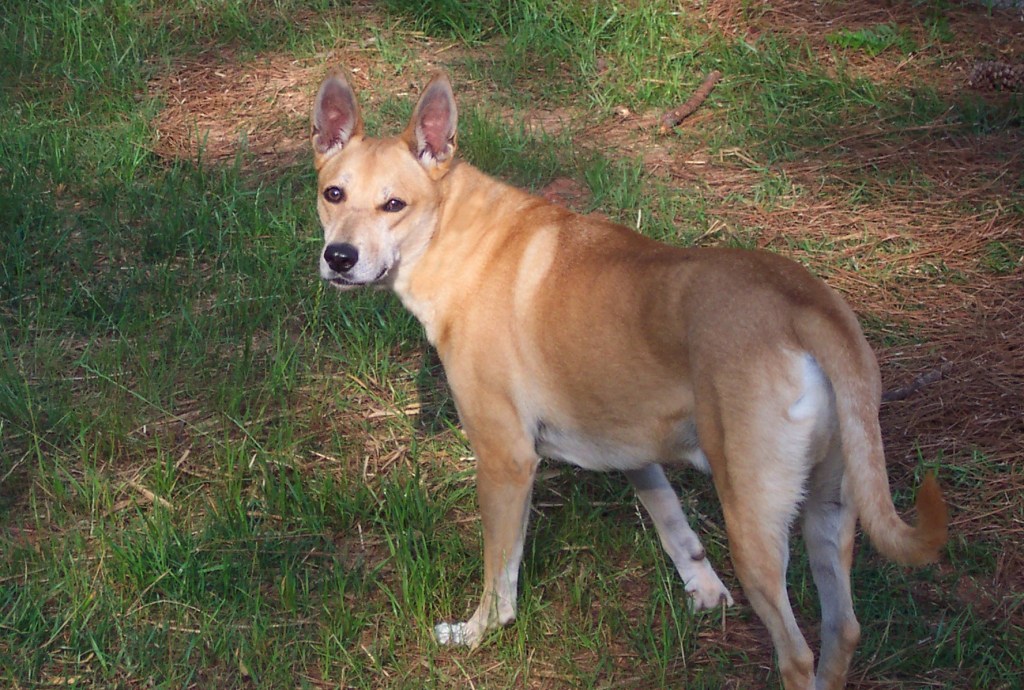
    Carolina dog “Hunter” in Calabash, North Carolina that participated in DNA testing to establish ancient origin of the species. 13 March 2013 Calabash13

    These dogs tend to run in packs and come from a variety of breeds but overtime some groups will start to become more genetically isolated and form a “landrace”. Where the dogs in a given area will become more genetically similar, exhibiting a common set of physical characteristics and behaviors. These landraces of wild dogs often don’t last long as they’re often exterminated or removed as pests. Genetic admixture from other dog lines prevents them from maintaining the genetic isolation necessary to maintain shared characteristics.

    What makes the modern Carolina dog is unique due to a large portion of their genetic makeup being from the dogs used by Indigenous people of the South Eastern United States. As well as their ability to survive in remote areas without reliance on human settlement to supply them with food. (Brisbin and Risch, 1997)

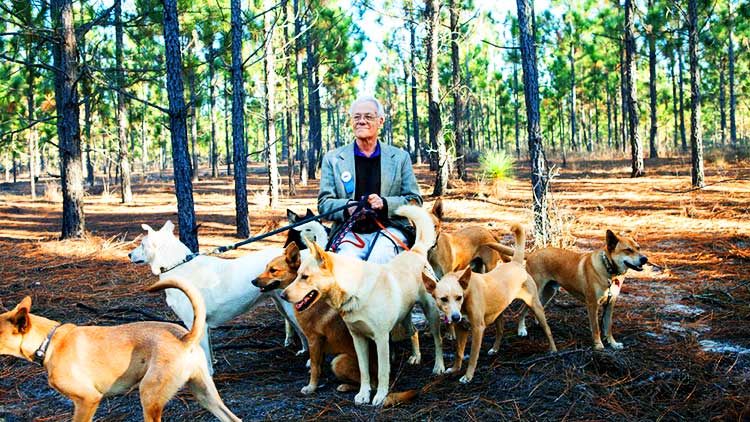
    Historically these dogs were often referred to as “Indian dogs” or aboriginal dogs (Cope 1863). Not much thought was given by ethnologists and biologists to these dogs until Dr. I. Lehr Brisbin lead ecologist of University of Georgia’s Savannah River Ecology Laboratory which studies the area around the Savannah River Nuclear Site. This site covers 310 square miles, area is almost completely depopulated and sealed off from trespassers which has allowed the Carolina dog to thrive (Brisbin and Risch, 1997).
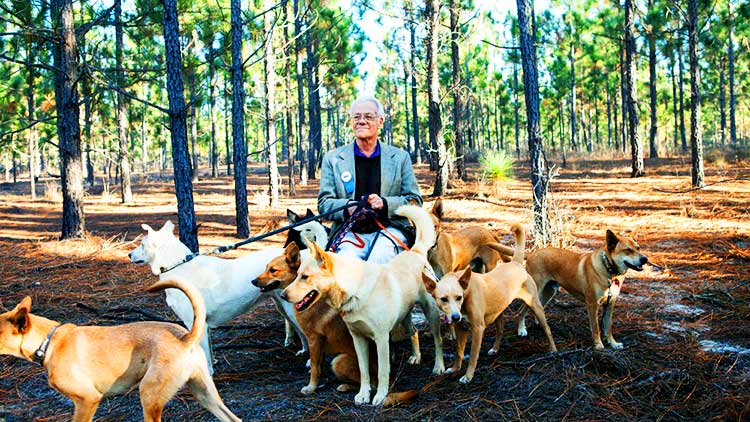
    Dr. I. Lehr Brisbin with his Carolina Dogs Published March 15, 2017 at 750 × 422 in Carolina Dog Breed Info And Characteristics

    They survive by hunting small to medium prey including shrews, raccoons, mice and reptiles with a tendency to pounce on prey like a fox. Reproductively the Carolina dog exhibits three successive estrus cycles which often settle into seasonal patterns when there’s an abundance of puppies. It is thought that this quick breeding enables Carolina dogs to reproduce quickly enough to sustain their population in the face of diseases, parasites and other challenges of living in the wild. Male Carolina dogs have also been observed to stay with their puppies and play a more active role then other dogs (Primitive Dogs).

    In regards to DNA there have been mixed results. One 2013 study on mitochondrial DNA indicated that 37% carried a unique haplotype (A184), which had not been previously documented and is related to the a5 mtDNA sub-haplogroup that came from East Asia (Boyko and vonHoldt).

    Another study in 2018 included three individual Carolina dogs showed a 0%-33% admixture from pre-Columbian dogs or from Arctic dogs. The study had no available method to identify the difference between these two groups and with only three dogs tested more research is certainly necessary to access the true genetic origins of this unique American dog. As a result some researchers believe that it may not have any pre-Columbian Dog DNA but the unique (A184) haplotype makes this seem unlikely. (Ní Leathlobhair et al. 81)

    Works Cited

    Ní Leathlobhair, Máire, et al. “The Evolutionary History of Dogs in the Americas.” Science, vol. 361, no. 6397, 2018, pp. 81–85. PubMed Central, https://pmc.ncbi.nlm.nih.gov/articles/PMC7116273/. Accessed 15 Dec. 2024.

    Boyko, Adam R., and Bridgett M. vonHoldt. “Canid Domestication and Population Genomics.” PLOS Genetics, Public Library of Science, 8(8), Aug. 2012, doi:10.1371/journal.pgen.1002892. Accessed 15 Dec. 2024.

    Primitive Dogs Team. “Carolina Dog Breed Info and Characteristics.” Primitive Dogs, Primitive Dogs, https://primitivedogs.com/carolina-dog-breed-info-characteristics/. Accessed 15 Dec. 2024.

    Cope, E. D. Dogs of the American Aborigines. 1863. Internet Archive, https://archive.org/details/cbarchive_107744_dogsofamericanaborigines1863/page/n183/mode/2up. Accessed 15 Dec. 2024.

    “Carolina Dog.” Wikipedia, 15 Dec. 2024, https://en.wikipedia.org/wiki/Carolina_Dog. Accessed 15 Dec. 2024.

    Brisbin, Ian L., and Thomas S. Risch. “Primitive Dogs, Their Ecology and Behavior: Unique Opportunities to Study the Early Development of the Human-Canine Bond.” Journal of the American Veterinary Medical Association, May 1997, doi:10.2460/javma.1997.210.8.1122a. Accessed via ResearchGate.

    Tim the Historian. “The American Dingo: Carolina Dogs~ History from Home.” YouTube, 30 Apr. 2023, www.youtube.com/watch?v=gwNc9wIO2M4. Accessed 15 Dec. 2024.

    4o
  • Dogs that aren’t Dogs

    In the strange history of domestication, nothing is both as strange and familiar as the case of South American Foxes such as the culpeo and other fox-like canids like the Dusicyons. While not true foxes these animals maintain many fox-like traits and are very similar in appearance. The Indigenous peoples of South America seem to have made several attempts to domesticate these animals. Most notably the extinct Fuegian dog, a culpeo domesticated by the Fuegian peoples of Patagonia particularly the Selk’nam and Yahgan. (“Fuegian Dog” Wikipedia)

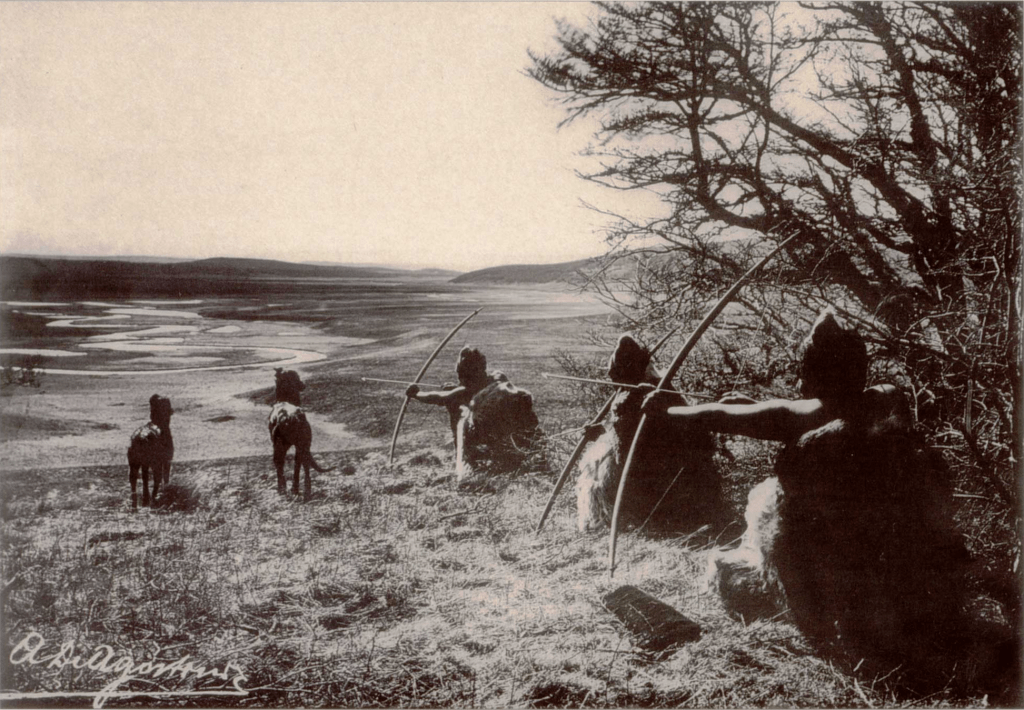
    Fuegian dog

    Alberto Maria de Agostini (1883-1960) – http://www.fund-edlb.org/postales.htm Världskulturmuseet, Göteborg: 006626

    Not much is known for sure about the Fuegian dogs and much of what is known is still being heavily debated. Fuegian Dogs are thought to be a domesticated species of culpeo a fox-like canid of South America while not a true fox they fit an ecological role similar to foxes and coyotes in North America but are more closely related to wolves and jackals. They mostly hunt small game but have been known to occasionally pray on sheep and baby Vicuñas (the wild ancestor of alpacas). (“Fuegian Dog” Wikipedia)

    Peru – Colca Canyon – Culpeo – Lycalopex culpaeus – PanAmericana 2017 – the image was taken on an overlanding travel from Ushuaia to Anchorage – taken by Thomas Fuhrmann, SnowmanStudios – see more pictures on / mehr Aufnahmen auf http://www.snowmanstudios.de

    They were used by the various Fuegian peoples as companions to keep warm through the harsh winters of Patagonia. Some reports indicate they were used to hunt Guanacos (Another wild camelid related to llamas) and other small game (“Fuegian Dog” Wikipedia). In 2013 Romina Petrigh and Martín Fugassa conducted DNA research on the remains of a Fuegian Dog held by the Fagnano Regional Museum. Their research concluded that Fuegian dogs had a 97.57% genetic similarity to culpeos and only an 88.93% similarity to domestic dogs. (Petrigh and Fugassa)

    In 2023, Fabian M. Jaksic and Sergio A. Castro attempted to refine the language used to describe the dogs used by the indigenous people in the region. They defined the Fuegian Dogs as typical domestic dogs descended from the pre-Columbian dogs maintained by most indigenous people of the Americas. While they define Patagonian dogs as the semi domesticated culpeos. (Dasilva et al.)

    Unfortunately the Fuegian dogs along with many of their Fuegian owners were victims a genocidal campaign by Chilean an Argentinian settlers and miners. (“Fuegian Dog” Wikipedia)

    Other Similar Domestication Attempts and possible connections

    Several other species are suspected to be domesticated or semi domesticated species of culpeos or South American Foxes. While these cases are not as well documented it is interesting to explore the possibility of several species of dog-like canids in South America.

    Dusicyon avus

    Dusicyon avus is a species of cerdocyonine, a sub-tribe of canines native to South America that went extinct between 300-500 years ago. While not a culpeo they are related and do share some similar physical characteristics.(“Dusicyon Avus” Wikipedia) We don’t know much about these animals but we know that there are at least two examples of them being buried with humans and isotopic analysis indicate they ate human food. (Prates) (Abbona et al.,)

    photo: Dusicyon avus on Wikipedia by Juandertal 2022

    This doesn’t necessarily mean that Dusicyon avus was tamed or domesticated. There could be many reasons why the indiginous people of south America might have buried someone with a wild animal including ritual, religious and magical believes or simply because that particular individual was personally fond of the animal.
    While we don’t know for sure the history of the Fuegian dog certainly leaves the door open for further research in this area.

    Falkland Islands wolf (Dusicyon australis)

    While commonly called a wolf, the Falkland’s Island Wolf is actually a species of Cerdocyonina most closely related to Dusicyon avus. (“Falkland Islands Wolf” Wikipedia)

    Mistaking these animals for wolves might have been an easy mistake for early European settlers to make. They would have been a completely new type of canine to the European explorers and they are comparable in size to a small wolf or coyote.

    Due to the long distance between the Falkland Islands and the South American mainland and some reports indicating that the Falkland Island Wolves were friendly or at least not fearful of humans. It has been suspected that the animals may have been introduced at some point by the Indigenous people of South America. (Masson-MacLean et al.)

    Warrah or Falkland Island wolf (Dusicyon australis); the specimen held at Otago Museum attributed to Kane Fleury

    However there is little evidence of the Indigenous people of South America arriving on the island prior to being brought there by colonial authorities and missionaries in the 1800s. (“History of the Falkland Islands” Wikipedia )

    Additionally genetic evidence suggests that the Falkland Islands Wolf was very genetically diverse with mtDNA sequencing showing that the animals tested last shared a common ancestor 330,000 years ago. (Slater et al.)

    If this is true then it would be unlikely they were brought to the Falklands by humans and might have instead cross via an ice bridge or drifted there on a natural raft of floating derby after a storm. (Slater et al.)

    The Falklands Island Wolf met it’s end like its distant cousin the Fuegian dog through a combination of the fur trade and intentional eradication by shepherds who saw them as a nuisance animal. (“Falkland Islands Wolf” Wikipedia)
    Citations

    Wikipedia contributors. “Falkland Islands Wolf.” Wikipedia, 11 Dec. 2024, en.wikipedia.org/wiki/Falkland_Islands_wolf. Accessed 11 Dec. 2024.

    Slater, Graham J., et al. “Origins of the Falklands Wolf.” Current Biology, vol. 19, no. 20, 2009, pp. R937–R938. Elsevier, doi:10.1016/j.cub.2009.08.052.

    Wikipedia contributors. “History of the Falkland Islands.” Wikipedia, 11 Dec. 2024, en.wikipedia.org/wiki/History_of_the_Falkland_Islands#Claims_of_pre-Columbian_discovery. Accessed 11 Dec. 2024.

    Masson-MacLean, E., et al. “Pre-Columbian Exploration and Colonization of the Falkland Islands: An Analysis of Archaeological and Genetic Evidence.” PLoS ONE, vol. 16, no. 10, 2021, e0259003. PubMed Central, doi:10.1371/journal.pone.0259003.

    Prates, Luciano. “Crossing the Boundary between Humans and Animals: The Extinct Fox Dusicyon Avus from a Hunter-Gatherer Mortuary Context in Patagonia (Argentina).” Antiquity 88.342 (2014)

    Wikipedia contributors. “Dusicyon Avus.” Wikipedia, 11 Dec. 2024, en.wikipedia.org/wiki/Dusicyon_avus. Accessed 11 Dec. 2024.

    Wikipedia contributors. “Fuegian Dog.” Wikipedia, 11 Dec. 2024, en.wikipedia.org/wiki/Fuegian_dog. Accessed 11 Dec. 2024.

    Petrigh, Romina S., and Martín H. Fugassa. “Molecular Identification of a Fuegian Dog Belonging to the Fagnano Regional Museum Ethnographic Collection, Tierra del Fuego.” Quaternary International, 2013. Accessed via Web Archive, 20 Dec. 2016, web.archive.org.

    Dasilva, Lorena C., et al. “Mitochondrial DNA Suggests a Complex Evolutionary History of Fuegian Dogs.” Revista Chilena de Historia Natural, vol. 96, no. 1, 2023, article 119, doi:10.1186/s40693-023-00119-z.